

Why Your Horse Reacts Differently on the Left and Right
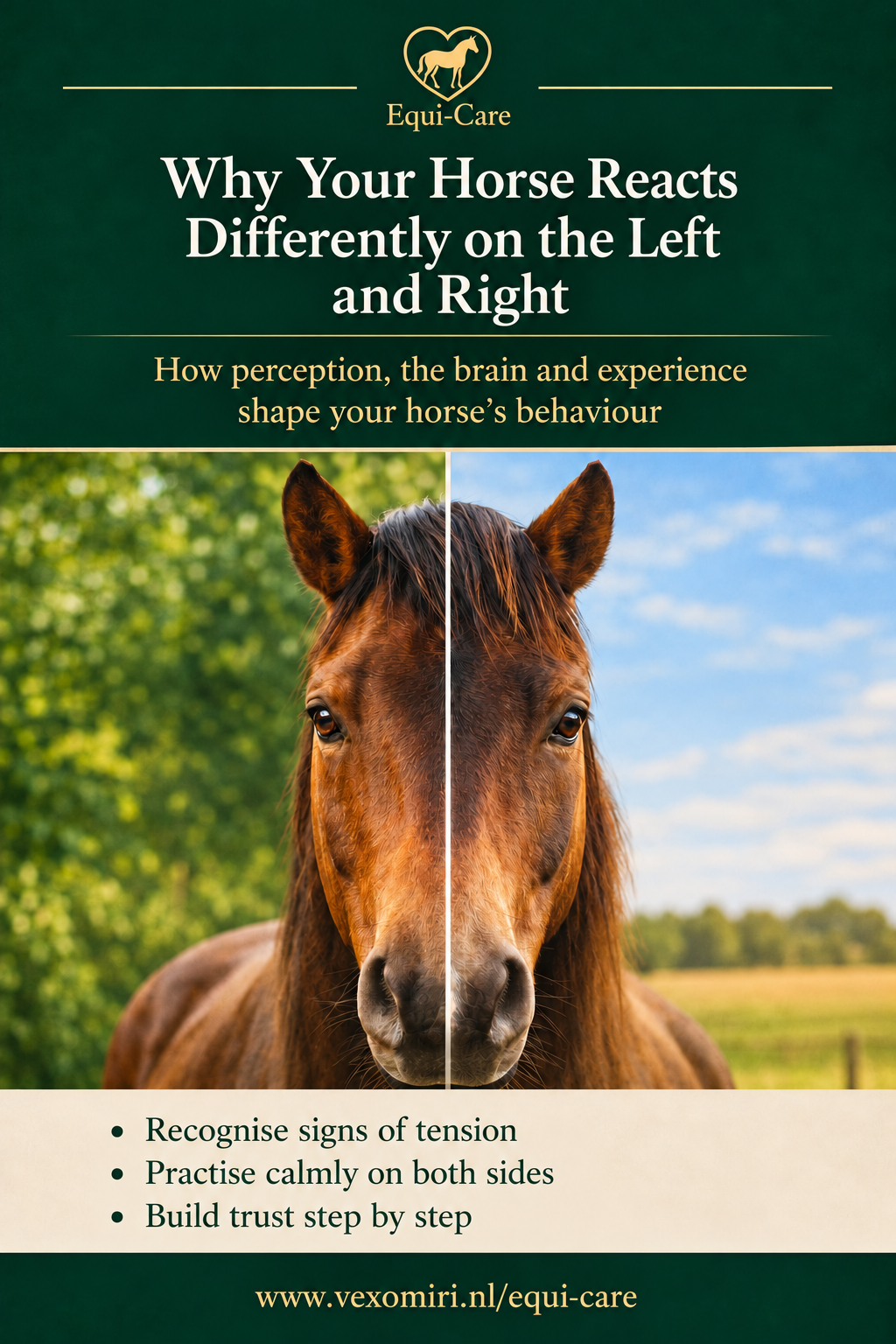
Why Your Horse Reacts Differently on the Left and Right | Perception, Learning and Trust
Relaxed on one side, suddenly hesitant on the other: does that sound familiar?
Your horse walks calmly past an object, but takes another look when you change direction. Or an exercise comes easily on the left, while the right requires more preparation. These differences can be confusing. This Equi-Care guide explores how perception, previous experiences and learning processes may play a part, and how you can adapt your approach accordingly.
Across 18 chapters, you will read about the horse’s field of vision, how it processes stimuli and how familiarity develops in different situations. The explanations are linked to recognisable moments during groundwork and under saddle. The guide covers body language, timing, startle responses and introducing new exercises in small steps. Practical exercises, training schedules and frequently asked questions help you observe more thoughtfully what your horse needs when you change sides or direction.
What you will learn in this guide
- How the way a horse sees and perceives its surroundings relates to everyday handling and training.
- How to recognise signs of uncertainty and tension and take them into account as you develop an exercise.
- How to introduce new objects and situations gradually, with attention to distance, pace and predictability.
- How to prepare exercises on both sides, during groundwork and under saddle.
- When persistent differences warrant a closer look at physical discomfort, previous experiences or the need for professional guidance.
Who is this guide for?
For horse owners, carers and riders who recognise differences between left and right and want to support their horses more calmly. The guide is suitable for anyone working on new situations, everyday handling or exercises that are more difficult on one side. If you also want to become more aware of your own position, body language and timing, it offers starting points for reviewing your approach and discussing it with an instructor.
Important
This guide is educational and does not replace veterinary examination, diagnosis or treatment. Differences between left and right can have several causes; behaviour alone does not reveal how information is processed in the brain. Seek professional assessment of sudden or persistent changes and suspected physical discomfort.
Familiarity develops when you adapt exercises to your horse’s responses and capabilities, on both sides.
Available exclusively in digital format through Equi-Care
You will receive a download link immediately after purchase
Digital products cannot be returned or cancelled


