

Salt and Electrolytes for Horses
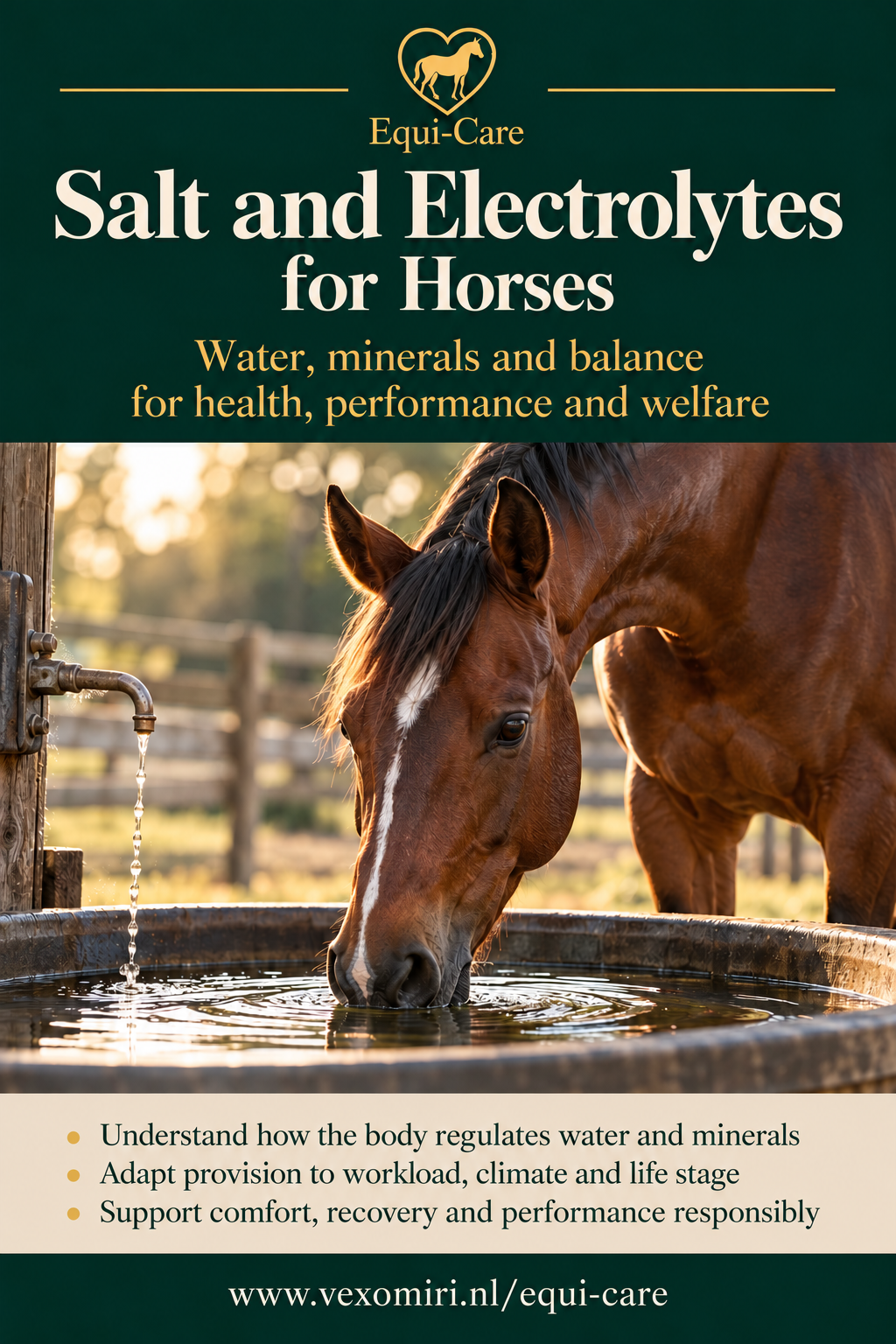
Salt and Electrolytes for Horses | Fluid Balance, Sweating and Recovery
Your horse has been sweating. Is water enough, or is more needed?
A salt lick in the stable, salt added to feed or an electrolyte product after riding: many horse owners use these without always knowing what their horse actually needs. Daily salt provision deserves attention even without strenuous training. At the same time, a horse working hard, sweating heavily or drinking less while travelling needs a different assessment from a leisure horse on a cool day.
This Equi-Care guide helps you understand the relationship between salt, electrolytes, drinking water, nutrition and recovery. You will learn how the daily diet contributes and which circumstances may alter requirements. The focus is on careful assessment as well as supplementation: what does your horse already consume, what does it lose, and when do changes in drinking, sweating or recovery deserve closer attention? The detailed explanations connect bodily processes with familiar situations in the stable, during training and while travelling.
What you will learn in this guide
- What salt and electrolytes are, and how they contribute to fluid balance and normal nerve and muscle function.
- How forage, the basic diet, a salt lick and loose salt contribute to daily provision.
- When additional electrolytes may be relevant during exercise, summer heat, transport and recovery.
- What to consider when choosing electrolyte products, deciding when to feed them and assessing their effects on eating and drinking.
- How to assess changes in drinking behaviour and recovery, why giving more is not always better, and when veterinary help is needed.
Who is this guide for?
For horse owners, carers and riders who want to make more informed decisions about salt and electrolytes in daily care. The guide is relevant to both leisure horses and horses undertaking more demanding work. It brings together knowledge to help you consider water, nutrition, workload and individual circumstances as a whole, making decisions less dependent on habit or isolated supplement advice.
Important
This guide is educational and does not replace veterinary examination, diagnosis or treatment. Suspected dehydration, illness or abnormal recovery requires assessment by a vet; extra salt or electrolytes cannot replace this.
Good support begins with understanding what your horse needs.


